



Škoda History: From Bicycles to Cars and Its India Journey
-
Startup Spotlight India
- November 8, 2026

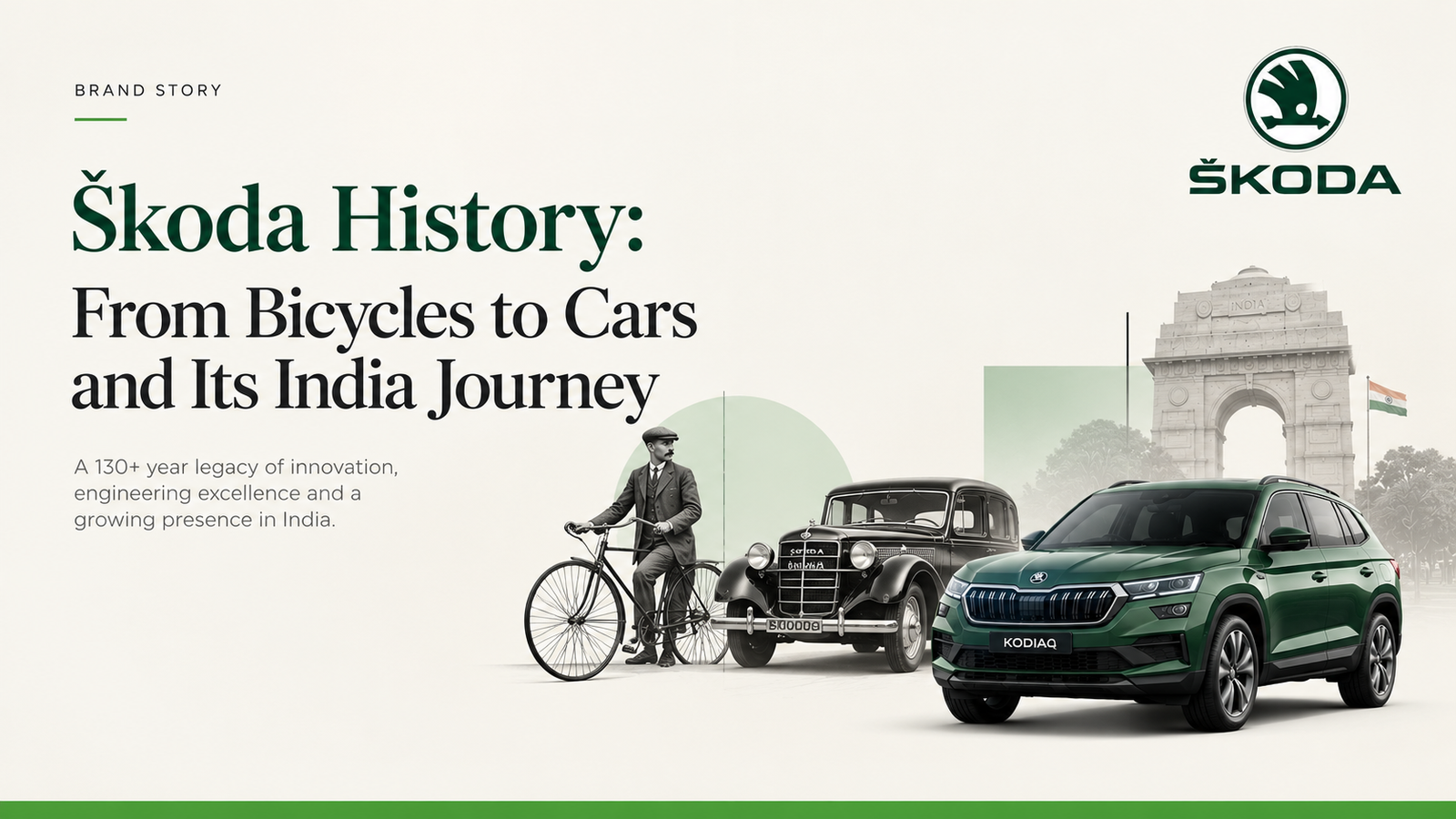
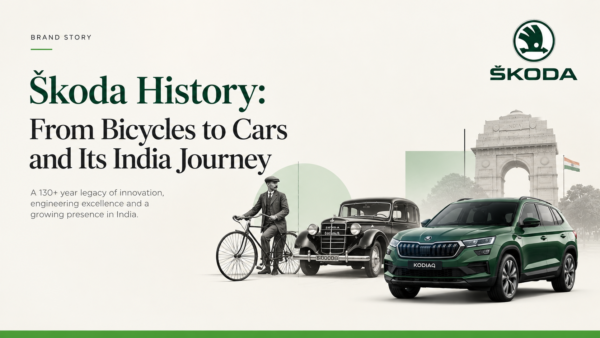
Skoda history began with a mechanic, a bookseller and a bicycle workshop in Mladá Boleslav, in what is now the Czech Republic. Founded in 1895 as Laurin & Klement, the business moved from bicycles to motorcycles and then cars, laying the foundations of the present-day automobile manufacturer.
More than a century later, India has become an important part of that story. Since introducing the Octavia to Indian customers in 2001, Škoda has expanded into local vehicle development, manufacturing and exports, giving the country a wider role in its international operations.
The Two Founders Behind the Business
Mechanic Václav Laurin and bookseller Václav Klement established their business in December 1895. Both were cycling enthusiasts, and their early workshop repaired and manufactured bicycles sold under the Slavia name.
According to Škoda’s historical account, the company presented its first motorcycles in 1899. In 1905, it introduced its first automobile, the Laurin & Klement Voiturette A.
The transition took about a decade from the company’s founding. From making bicycles, Laurin & Klement had entered a developing automobile industry, with the Voiturette A powered by a one-litre, two-cylinder engine.
How Laurin & Klement Became Škoda
The Škoda name entered the carmaker’s history through a merger in 1925.
Following economic difficulties and a fire that damaged its factory in 1924, Laurin & Klement sought a larger industrial partner. It joined the Pilsen-based Škoda group, with the merger receiving ministerial approval on September 12, 1925.
As documented in Škoda’s account of the merger, the combination supported investment in manufacturing, technology and distribution, including assembly-line production.
The founders’ names remained part of the brand’s identity. Since 1995, the Laurin & Klement designation has been used for Škoda’s highest trim levels.
The Volkswagen Partnership and Global Expansion
Another change came on April 16, 1991, when Škoda joined the Volkswagen Group. The partnership supported further development of its products and manufacturing operations, while its range subsequently expanded into additional vehicle segments.
The scale of the business is reflected in its 2025 annual report. Škoda delivered 1,043,938 vehicles worldwide during the year, an increase of 12.7%. The Octavia remained its largest-selling model globally, with 190,275 deliveries.
Electric vehicles have also become part of its business. Battery-electric vehicle deliveries reached 174,885 in 2025, with the Elroq and Enyaq contributing to the brand’s electric vehicle sales.
Building an Identity Around Everyday Practicality
Alongside its model range, Škoda has developed its “Simply Clever” identity around practical features for everyday use.
Examples across its models have included integrated umbrella storage, shopping-bag hooks and an ice scraper stored inside the fuel filler flap. These features vary by vehicle and market.
The company’s account of the Simply Clever concept traces its modern development to the first-generation Superb in 2001, which introduced umbrella storage. The Roomster concept shown at the 2003 Frankfurt Motor Show subsequently demonstrated features including sliding rear seats and swivel front seats.
Škoda’s Arrival in India
Škoda began establishing its Indian presence in January 2000, when it laid the foundation stone for its plant in Aurangabad, now Chhatrapati Sambhajinagar. Its customer-facing journey followed with the Octavia in 2001.
According to its 25-year India retrospective, the first Octavia cars were assembled from imported parts in rented facilities while the plant was being built.
Models including the Fabia, Rapid, Superb and Kodiaq subsequently became part of its Indian journey.
India 2.0 and the Shift Towards Local Development
A further change came through the Volkswagen Group’s India 2.0 programme, led by Škoda.
The group confirmed a EUR 1 billion investment in the programme in July 2018. In January 2019, Škoda and Volkswagen opened a Technology Center in Pune to support vehicles developed around Indian market requirements.
Central to the programme was the MQB-A0-IN vehicle platform. The Kushaq entered production in Pune in 2021, followed by the Slavia’s launch in 2022. The Kylaq later extended Škoda’s range into the sub-four-metre SUV segment.
In its January 2025 retrospective, Škoda said these three India-developed models had achieved localisation of up to 95%.
Škoda’s Manufacturing and Market Presence in India
Škoda’s manufacturing presence sits within Škoda Auto Volkswagen India Private Limited, the Pune-headquartered company overseeing multiple Volkswagen Group brands in the country.
The company operates plants at Chakan near Pune and Chhatrapati Sambhajinagar. A September 2026 manufacturing update put their combined annual capacity at 315,000 vehicles. This capacity covers the group’s Indian manufacturing operations.
Škoda’s India range includes the Kylaq, Kushaq, Slavia and Kodiaq. It also announced a second limited batch of 50 Octavia RS cars in September 2026.
Distribution has expanded alongside the range. In a September 2026 company announcement published by Business Standard, Škoda reported more than 346 customer touchpoints across 193 Indian cities.
Sales Growth and India’s Export Role
In its India year-end announcement, Škoda reported sales of 72,665 cars in 2025, up 107% from 35,166 in 2024. A Business Today interview with its India brand director identifies these as sales to dealers. Separately, Škoda’s 2025 annual report recorded 70,551 vehicles delivered to customers in India, up 96.1% year on year. The company identified the Kylaq as a key growth driver.
India’s contribution also extends to overseas production. In March 2025, Škoda and Thanh Cong Group opened a vehicle assembly plant in Vietnam, beginning Kushaq production using completely knocked-down kits imported from India. Škoda’s subsequent full-year update confirmed that production of both the Kushaq and Slavia had begun in Vietnam.
Taken together, these developments show how Škoda’s Indian operations have changed: from assembling an international model for domestic buyers to developing vehicles locally and supporting production in another market.
Frequently Asked Questions
Who founded Škoda, and when?
Škoda traces its origins to Václav Laurin and Václav Klement, who founded Laurin & Klement in 1895.
Which country is Škoda from?
Škoda originated in Mladá Boleslav, in what is now the Czech Republic.
What was Škoda’s first car?
The company’s first car was the Laurin & Klement Voiturette A, introduced in 1905.
Is Škoda part of the Volkswagen Group?
Yes. Škoda joined the Volkswagen Group on April 16, 1991.
When did Škoda enter India?
Škoda began establishing its Indian operations in 2000 and introduced the Octavia to Indian customers in 2001.