




Centre Considers Security Device for Starlink and Satellite Internet Operators
-
Khushi Jain

- October 20, 2026
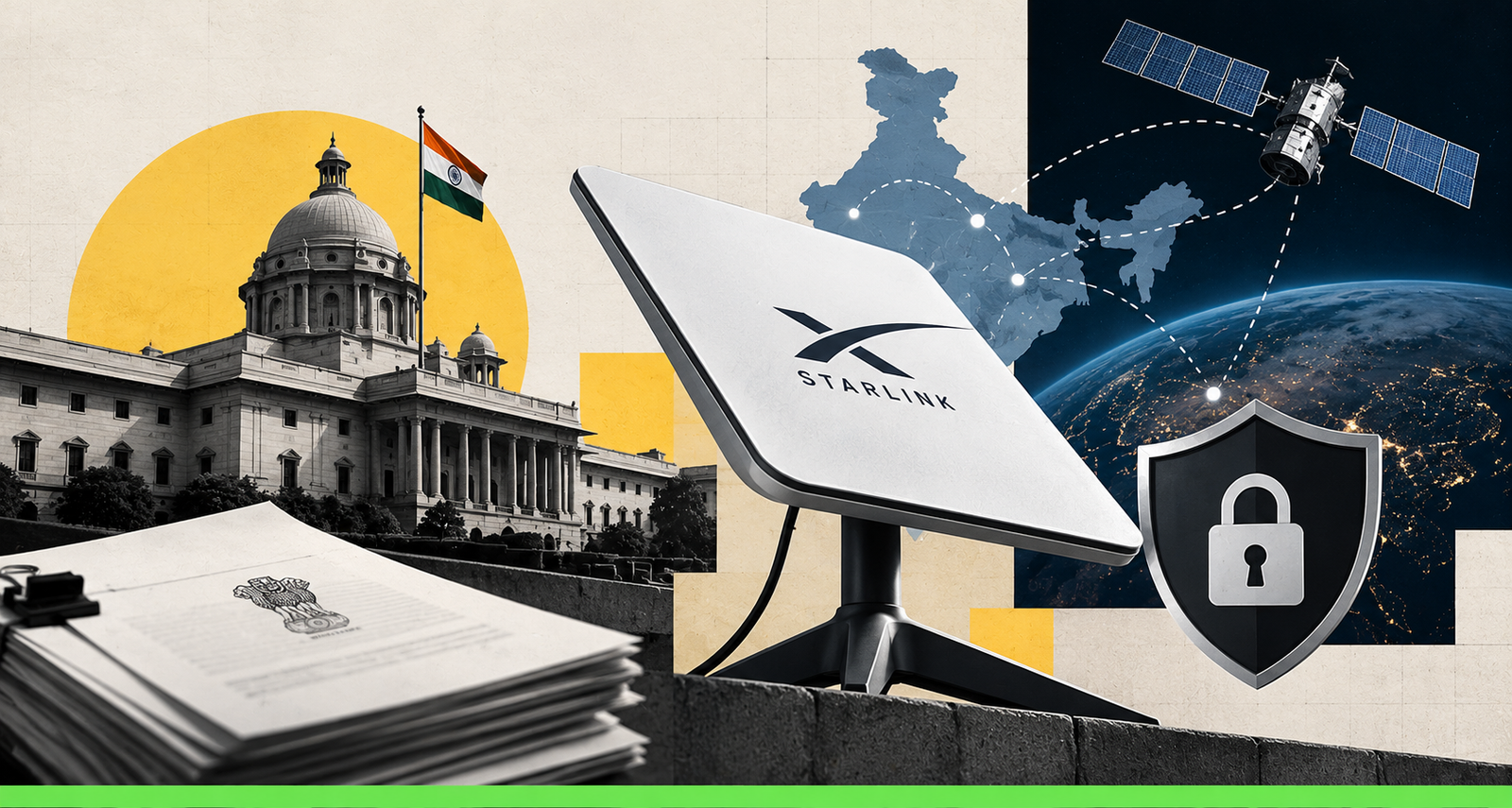
The Centre is reportedly considering developing a hardware device to strengthen security oversight of satellite internet services offered by Starlink and other overseas operators.
According to an ET report citing people familiar with the discussions, the proposed device would function as a control layer between users and satellite networks, routing all satellite traffic through it. The hardware could be installed at subscriber premises or satellite ground stations.
The government is considering involving public sector research and development units with expertise in communications technology. Participation by select private players may also be allowed.
An official cited in the report said the proposed security layer would address risks associated with foreign satellite operators that may be treated as untrusted transport carriers.
The proposal remains under discussion, and its technical specifications and implementation timeline have yet to be finalised.
Satellite broadband could help connect remote communities and businesses in areas where deploying terrestrial networks is difficult or expensive.
Starlink, Jio and OneWeb Await Government Clearances
The development comes after Elon Musk accused Indian business interests of blocking Starlink’s entry into the country to protect their telecom operations. He also targeted Reliance Industries chairman Mukesh Ambani, questioning whether he was the “real boss of India”.
Reliance rejected the allegations, saying it welcomed competition, including from Starlink. The company also noted that Jio’s satellite services were awaiting government clearances.
The Ministry of Communications denied allegations of preferential treatment, maintaining that Starlink, Reliance Jio Satellite Communications, and Bharti Enterprises-backed Eutelsat OneWeb are at broadly the same regulatory stage.
All three operators have received Global Mobile Personal Communication by Satellite (GMPCS) licences. However, they must complete security assessments and fulfil the relevant conditions before spectrum can be assigned and commercial services launched.
Obtaining a licence and IN-SPACe authorisation does not mean an operator has completed its security assessment or secured spectrum.
Security Concerns Drive Scrutiny of Satellite Networks
The proposed hardware layer reflects concerns about foreign operators controlling critical communications infrastructure, particularly during conflicts or other national security emergencies.
Starlink’s role in Ukraine has brought these risks into focus. Ukrainian President Volodymyr Zelenskyy accused the company of slowing connection speeds and impeding operations during the conflict with Russia.
Other countries, including Iran and South Africa, have also raised concerns about Starlink’s operations or authorisations in the past.
Speaking to Inc42 last week, Innefu Labs cofounder and CEO Tarun Wig said foreign-controlled satellite networks could pose risks related to data sovereignty, service continuity, and external control over critical communications infrastructure.
However, Wig said the circumstances in Ukraine did not automatically mean India would face the same risks.
Quantive Advisory founder Sohom Banerjee highlighted the need for operational checks covering who can activate terminals, change routing or coverage, access sensitive network information, and suspend services.
FAQs
1. What hardware device is the Centre considering for satellite internet services?
The Centre is considering a hardware device that would act as a security control layer between users and satellite networks, routing all satellite traffic through it.
2. Where could the proposed security device be installed?
The device could be installed at subscriber premises or satellite ground stations.
3. Which satellite internet operators are awaiting government clearances?
Starlink, Reliance Jio Satellite Communications, and Bharti Enterprises-backed Eutelsat OneWeb are awaiting completion of the required security assessments and other conditions before spectrum assignment and commercial launches.
4. Why is the government considering additional security oversight?
The proposal addresses concerns about foreign operators controlling critical communications infrastructure and the associated risks to data sovereignty, service continuity, and national security.
5. Have Starlink, Jio and OneWeb received GMPCS licences?
Yes. All three operators have received GMPCS licences, but they must complete security assessments and meet relevant conditions before spectrum can be assigned and commercial services launched.