


Indian Travel and Hospitality Industry: Trends, Growth and Opportunities in 2027
-
Khushi Jain

- November 26, 2026

India’s travel and hospitality industry is entering 2027 with a growing domestic travel market, changing consumer preferences and increasing investment in tourism infrastructure. From family holidays and religious trips to business conferences and destination weddings, different forms of travel are creating opportunities for established companies and new businesses.
According to the Ministry of Tourism, India recorded 428.55 crore domestic tourist visits in 2025, while foreign tourist visits reached 2.53 crore. Foreign exchange earnings from tourism stood at Rs 2,76,831 crore during the year.
The industry is also benefiting from the expansion of online booking platforms, regional air connectivity, alternative accommodation and specialised travel services.
As 2027 approaches, travel startups, hotel operators and tourism businesses have opportunities to serve customers beyond traditional holiday destinations and metropolitan cities.
Indian Travel and Hospitality Industry: Market Size and Key Statistics
According to the World Travel & Tourism Council (WTTC), India’s travel and tourism sector contributed $263.6 billion to the economy in 2025 and supported 46.2 million jobs.
WTTC expects the sector’s economic contribution to reach $286.1 billion in 2026, representing annual growth of 8.5%.
Domestic travellers accounted for 86% of total tourism expenditure in India in 2025, with spending reaching $203 billion.
| Particulars | Data |
|---|---|
| Domestic tourist visits in 2025 | 428.55 crore |
| Foreign tourist visits in 2025 | 2.53 crore |
| Foreign exchange earnings in 2025 | Rs 2,76,831 crore |
| Travel and tourism economic contribution in 2025 | $263.6 billion |
| Domestic visitor spending in 2025 | $203 billion |
| Jobs supported in 2025 (WTTC estimate) | 46.2 million |
| Projected economic contribution in 2026 | $286.1 billion |
| Projected hospitality revenue growth in FY2027 | 7–9% |
| Projected premium hotel occupancy in FY2027 | 72–74% |
Tourist visits represent recorded visits rather than unique individuals. The economic contribution estimated by WTTC also differs from the revenue generated directly by travel and hotel companies.
Key Factors Driving Growth in India’s Travel Industry
Domestic tourism remains the foundation of India’s travel market. The Domestic Tourism Expenditure Survey, conducted by the National Statistics Office between July 2025 and June 2026, provides insights into how Indian households travel.
Among its findings, around 80% of overnight visitors in the specified travel categories stayed for five days or less. Religious travel accounted for 48% of overnight trips across four surveyed travel purposes in both rural and urban areas.
These findings indicate opportunities for affordable short-duration holiday packages, pilgrimage services and regional accommodation businesses.
Top 8 Travel and Hospitality Industry Trends in India in 2027
1. Hotel Expansion Beyond Metropolitan Cities
Hotel development in India is gradually moving beyond major metropolitan cities. Smaller cities are attracting hotel operators because of regional business activity, domestic tourism and improving transport connections.
According to the HVS ANAROCK India Hospitality Industry Overview 2025:
- Hotel brands signed agreements covering approximately 64,118 rooms across 586 properties in 2025.
- Around 14,199 rooms across 176 properties opened during the year.
Hotel signings represent planned additions to supply and should not be confused with operational hotel rooms.
In 2027, regional hotel chains, budget accommodation providers and independent hospitality businesses could benefit from demand in smaller cities.
2. Rising Demand for Spiritual and Religious Tourism
Religious tourism remains an important part of India’s domestic travel industry. Ayodhya, Varanasi, Ujjain, Tirupati, Shirdi and Amritsar attract pilgrims seeking accommodation, transport and other travel services.
The Union Budget 2026-27 proposed developing Buddhist tourism circuits across Arunachal Pradesh, Assam, Sikkim, Manipur, Mizoram and Tripura.
The proposed development includes improvements to visitor facilities, connectivity and religious heritage sites.
Business opportunities in this segment include affordable hotels, guided pilgrimage tours, vegetarian food services and assisted travel packages for elderly visitors.
3. Artificial Intelligence and Travel Technology
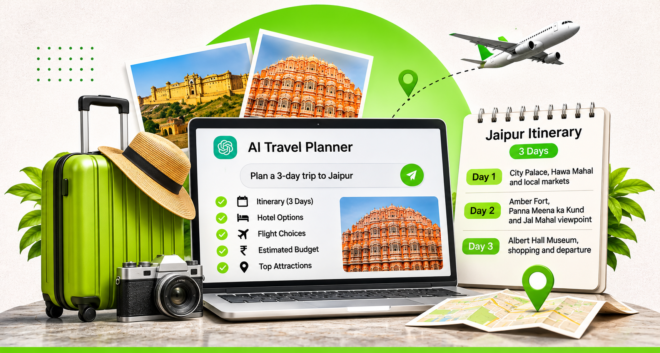
Artificial intelligence is becoming part of the travel booking process. Companies are using AI to help customers search for accommodation, compare travel options and manage enquiries.
MakeMyTrip, for example, offers Myra, an AI-powered travel assistant for flights and accommodation.
In 2027, travel technology startups could focus on:
- Personalised itinerary planning
- Regional language booking assistance
- Automated customer support
- Hotel pricing and inventory management
- Travel expense management
The challenge will be ensuring that AI-generated recommendations contain accurate prices, schedules and booking information.
4. Growth of Homestays and Alternative Accommodation
Alternative accommodation provides travellers with options beyond conventional hotels. Homestays, private villas, serviced apartments and backpacker hostels cater to different budgets and travel preferences.
Companies such as StayVista, SaffronStays, Airbnb and Zostel operate in this market.
The Ministry of Tourism has introduced guidelines for developing homestays in tribal areas under the Swadesh Darshan 2.0 scheme.
This segment offers opportunities for property owners and startups providing property management, online booking, housekeeping and guest support services.
However, hygiene, safety, property verification and consistent service remain important considerations.
5. Medical and Wellness Tourism
Medical tourism creates business opportunities across healthcare, accommodation and travel assistance.
Patients travelling outside their home cities or countries often require help with hospital appointments, transport, accommodation and language translation.
The Union Budget 2026-27 proposed establishing five regional medical hubs through partnerships with the private sector.
Wellness tourism offers a separate opportunity through yoga retreats, Ayurveda centres, meditation programmes and wellness resorts.
Businesses entering these segments must ensure qualified service providers, transparent pricing and reliable customer assistance.
6. Business Travel, Conferences and Destination Weddings
Business travel continues to generate demand for hotels, transport services and event management companies.
The Meetings, Incentives, Conferences and Exhibitions (MICE) segment provides opportunities for convention centres, corporate travel agencies and hospitality operators.
India has also been selected to host the WTTC Global Summit in Delhi in 2027. The event will bring together representatives from international tourism, hospitality and related industries.
Destination weddings represent another market for resorts, catering businesses and event planners, particularly in locations with established wedding infrastructure.
7. Sustainable and Experience-Based Tourism
Experience-based tourism includes activities such as heritage walks, wildlife tours, farm stays, trekking and regional food experiences.
Local tour operators can develop these services without the investment required to establish large hotels or resorts.
The Ministry of Tourism has published national strategies for sustainable tourism, rural tourism and adventure tourism.
For businesses, responsible tourism involves managing waste, conserving water, protecting natural surroundings and working with local communities.
8. Improved Regional Air Connectivity
Transport accessibility plays an important role in determining the commercial potential of tourism destinations.
On 25 March 2026, the Union Cabinet approved the Modified UDAN regional connectivity scheme with an outlay of Rs 28,840 crore for ten financial years.
The scheme includes proposals to develop 100 airports from existing unserved airstrips and construct 200 modern helipads.
As these projects progress, travel businesses could gain access to destinations with limited air connectivity. However, commercial opportunities will depend on project completion, flight frequency and passenger demand.
Growth Outlook for India’s Hotel Industry in 2027
Credit rating agency ICRA expects India’s hospitality industry revenue to increase by 7% to 9% in FY2027, following growth of 11% in FY2026.
Its October 2026 estimates also indicate an improvement in hotel occupancy and room rates.
| Performance indicator | October 2025 | October 2026 |
|---|---|---|
| Hotel occupancy | 74–76% | 75–77% |
| Average room rate | Rs 8,500–8,600 | Rs 8,700–8,900 |
These industry estimates indicate continued demand from domestic holidays, corporate travel and events. Higher room rates, however, may encourage budget-conscious travellers to consider alternative accommodation.
Travel and Hospitality Startup Opportunities in 2027
Entrepreneurs planning to enter India’s tourism industry can consider the following business segments.
| Business opportunity | Potential revenue model |
|---|---|
| AI travel planning platforms | Subscription and booking commissions |
| Pilgrimage travel services | Tour package sales |
| Homestay management | Property management fees |
| Hotel management software | Monthly subscriptions |
| Corporate travel services | Business contracts |
| Medical tourism assistance | Service and coordination fees |
| Regional tour operators | Guided tour bookings |
| Adventure tourism | Activity and package charges |
| Luggage storage services | Hourly and daily charges |
| Local travel experiences | Direct bookings and commissions |
Startups do not necessarily need to compete with large online travel agencies. Specialising in a particular destination, customer group or travel requirement may provide a more practical entry into the market.
Government Initiatives Supporting Tourism in India
| Government initiative | Objective |
|---|---|
| Swadesh Darshan 2.0 | Responsible tourism destination development |
| PRASHAD Scheme | Pilgrimage and religious destination development |
| Modified UDAN | Expansion of regional air connectivity |
| Buddhist Tourism Circuits | Religious and heritage tourism development |
| National Institute of Hospitality proposal | Hospitality education and workforce training |
| Regional Medical Hubs proposal | Medical tourism development |
Challenges Facing the Indian Travel and Hospitality Industry
Despite its growth prospects, the industry faces several operational challenges.
- Rising hotel operating and transport costs
- Shortages of trained hospitality professionals
- Seasonal changes in tourist demand
- Limited infrastructure in remote destinations
- Competition and booking platform commissions
- Overcrowding at popular tourist destinations
- Fraudulent bookings and misleading property listings
Businesses will need to balance expansion with service quality, customer affordability and profitability.
Future of the Indian Travel and Hospitality Industry
India’s travel and hospitality industry has considerable room for expansion beyond established tourist destinations.
Domestic demand, regional connectivity and digital booking services are likely to remain important factors in 2027. International tourism also offers room for growth, particularly in medical, heritage and business travel.
For entrepreneurs, the opportunity lies in solving everyday travel problems. Affordable accommodation, dependable transport, transparent booking prices and reliable customer support can help businesses earn repeat customers.
The next phase of industry growth will depend on how effectively companies meet these needs while managing operating costs and maintaining service standards.
Frequently Asked Questions (FAQs)
1. What is the market size of India’s travel and tourism industry?
According to WTTC, India’s travel and tourism sector contributed $263.6 billion to the economy in 2025. This contribution is projected to reach $286.1 billion in 2026.
2. What is the expected growth of India’s hospitality industry in 2027?
ICRA expects hospitality industry revenue to grow by 7% to 9% in FY2027, which ends on 31 March 2027.
3. What are the major travel industry trends in India in 2027?
Key areas include religious tourism, artificial intelligence, alternative accommodation, medical tourism, regional travel and experience-based tourism.
4. What are the best travel startup business opportunities in India?
Travel planning platforms, homestay management, pilgrimage packages, corporate travel services and hotel management software are potential business opportunities.
5. Why is domestic tourism important for India’s hospitality industry?
Domestic travellers accounted for 86% of India’s total travel and tourism spending in 2025, according to WTTC.






One Comment
AI Holiday Planning: Can AI Replace Travel Agents?
[…] AI presents new business opportunities within the Indian travel and hospitality industry. […]