



Apple Confirms Internal Update Behind iCloud and App Store Outage
-
Khushi Jain

- November 18, 2026
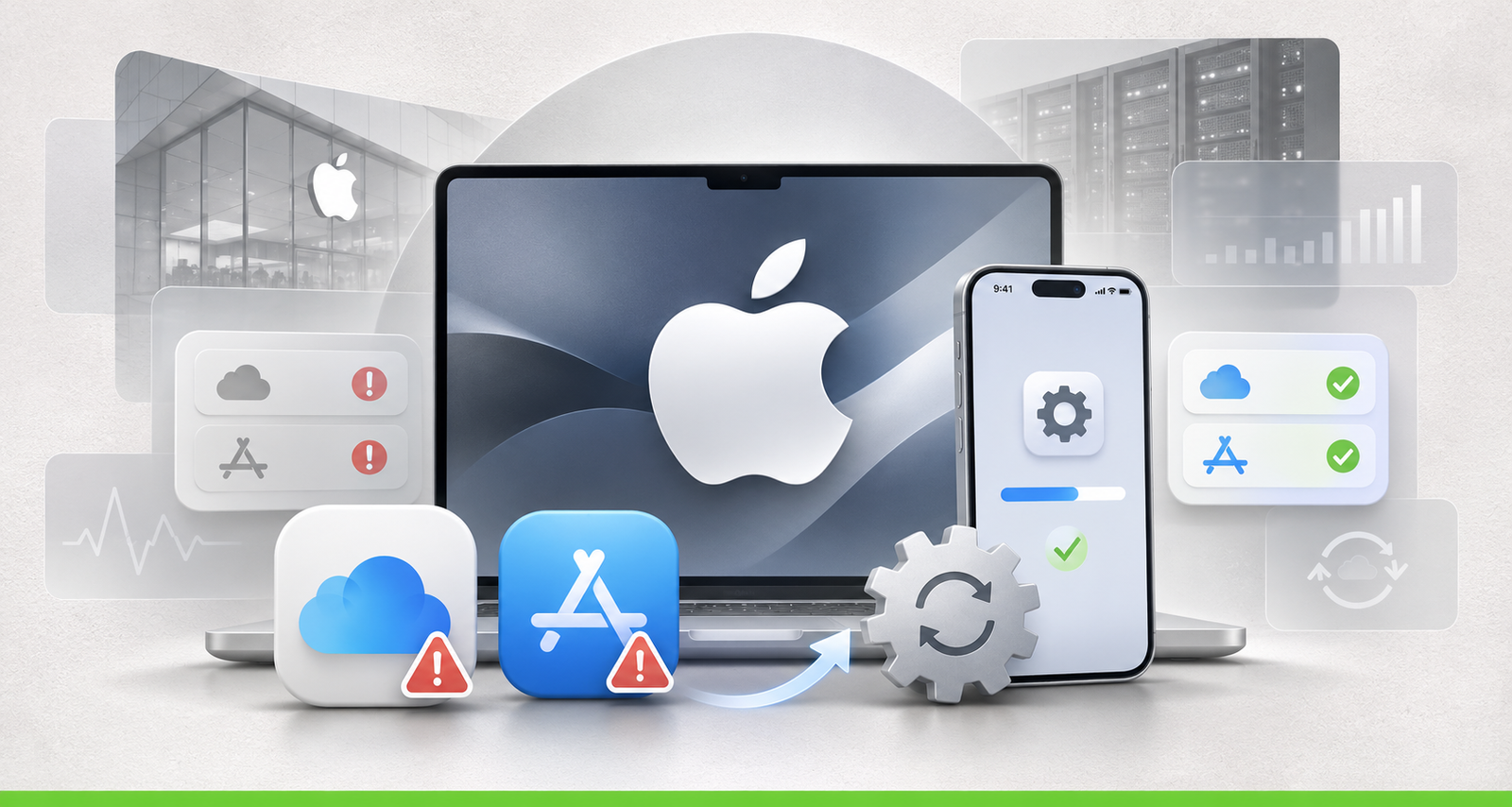
Apple experienced a widespread service outage on November 17, 2026, affecting thousands of users worldwide. The disruption affected several online services, including iCloud, the App Store, Apple Music and Apple Pay.
According to outage tracking platform Downdetector, users began reporting problems with Apple’s services at around 9:51 PM IST on November 17.
Reports indicated difficulties accessing Apple Pay, iCloud, the App Store, Apple Business Manager, Apple Music and Apple Support.
According to a Reuters report, Apple confirmed that an internal update had caused the disruption and said the incident was not the result of a cyberattack.
The company said several affected systems had been restored while work continued on the remaining services.
Apple Confirms Outages Across Multiple Services
Apple’s System Status page confirmed disruptions affecting iCloud Mail, AppleCare on Device and Apple School Manager.
been unexpectedly signed out of their accounts and were unable to sign back in.
Others reported difficulties activating new iPhones during the disruption.
The reports indicated that the problems affected account access, device activation and several services used by individual and bu
Users also reported problems with other Apple services, including the App Store, Apple Music and Apple Pay.
Some users said they hadsiness customers.
Apple’s official status updates and user reports did not necessarily cover the same services at the same time.
According to TechCrunch, Apple’s status page was subsequently updated to include further disruptions involving Apple School Manager, iCloud Web Apps, Schoolwork and the Volume Purchase Program.
Apple Attributes Outage to Internal Update
Apple initially provided limited public information about the cause of the disruption.
The company later told Bloomberg that an internal update had caused the outages, ruling out a cyberattack.
In a statement, Apple said many of its systems had returned to normal operations and that work was continuing to restore the remaining affected services.
The company did not disclose further technical details about the update or explain which systems were directly responsible for the disruption.
The incident temporarily affected access to services used for payments, cloud storage, app downloads and account management.
The company subsequently reported progress in restoring access to the affected systems.
Microsoft Outlook and Teams Also Faced Global Disruption
Apple’s outage followed a separate service disruption affecting Microsoft products earlier in November.
On November 12, 2026, Microsoft Outlook, Teams and other Microsoft 365 services experienced a widespread outage that disrupted access for businesses and individual users.
The disruption lasted more than 30 hours before Microsoft confirmed that the affected services had been restored.
The company attributed the problems to server-related technical issues that reduced the availability of several systems.
Some servers became unexpectedly unavailable, placing additional demand on the remaining infrastructure.
According to India Today, Microsoft restored its affected services after more than 36 hours of disruption.
The incident affected services used for email, communication and workplace collaboration.
OpenAI Services Also Experienced Earlier Outages
Other technology companies have experienced similar service disruptions during 2026.
In April, OpenAI experienced a partial outage affecting ChatGPT, its coding platform Codex and its API services.
The disruption affected users attempting to access the company’s AI tools.
OpenAI also experienced an outage in March that left ChatGPT unavailable for thousands of users.
These incidents added to a series of service interruptions involving major technology providers.
The disruptions have raised concerns about the dependence of businesses and consumers on a relatively small number of cloud and technology service providers.
Technology experts have pointed to the importance of business continuity planning and maintaining alternative systems to reduce the impact of service interruptions.
No Evidence of Cyberattack Behind Recent Disruptions
The recent outages prompted speculation on social media about whether cyberattacks were responsible.
However, Apple confirmed that its November 17 disruption resulted from an internal update rather than a cyberattack.
The other major outages reported during the preceding week were also attributed to technical problems rather than confirmed cyberattacks.
The incidents demonstrate how technical failures can interrupt access to services used by businesses and individuals across multiple countries.
Apple’s response focused on restoring its affected systems, while the recent disruptions at Microsoft and OpenAI have renewed discussions about service reliability and contingency planning among major technology providers.
Frequently Asked Questions (FAQs)
1. Why did Apple services experience an outage on November 17, 2026?
Apple said the outage was caused by an internal update that disrupted several of its systems. The company ruled out a cyberattack.
2. Which Apple services were affected by the outage?
Users reported problems with iCloud, Apple Pay, the App Store, Apple Music, Apple Support and Apple Business Manager. Apple also confirmed disruptions to services including iCloud Mail and Apple School Manager.
3. When did users begin reporting the Apple outage?
According to Downdetector, users began reporting problems at approximately 9:51 PM IST on November 17, 2026.
4. Did Apple confirm that the outage was caused by a cyberattack?
No. Apple stated that an internal update caused the disruption and confirmed that it was not related to a cyberattack.
5. Which other technology companies experienced major outages in November 2026?
Microsoft experienced a widespread outage on November 12, affecting Outlook, Teams and other Microsoft 365 services. The disruption lasted more than 30 hours.










One Comment
Google Rolls Out Gemini Tasks AI Assistant for Free in India, Adds Booking and Shopping Features
[…] […]