


Soket AI Raises $4 Million From Bajaj Finance and Pennant Technologies to Develop Indigenous AI Models
-
Khushi Jain

- November 18, 2026
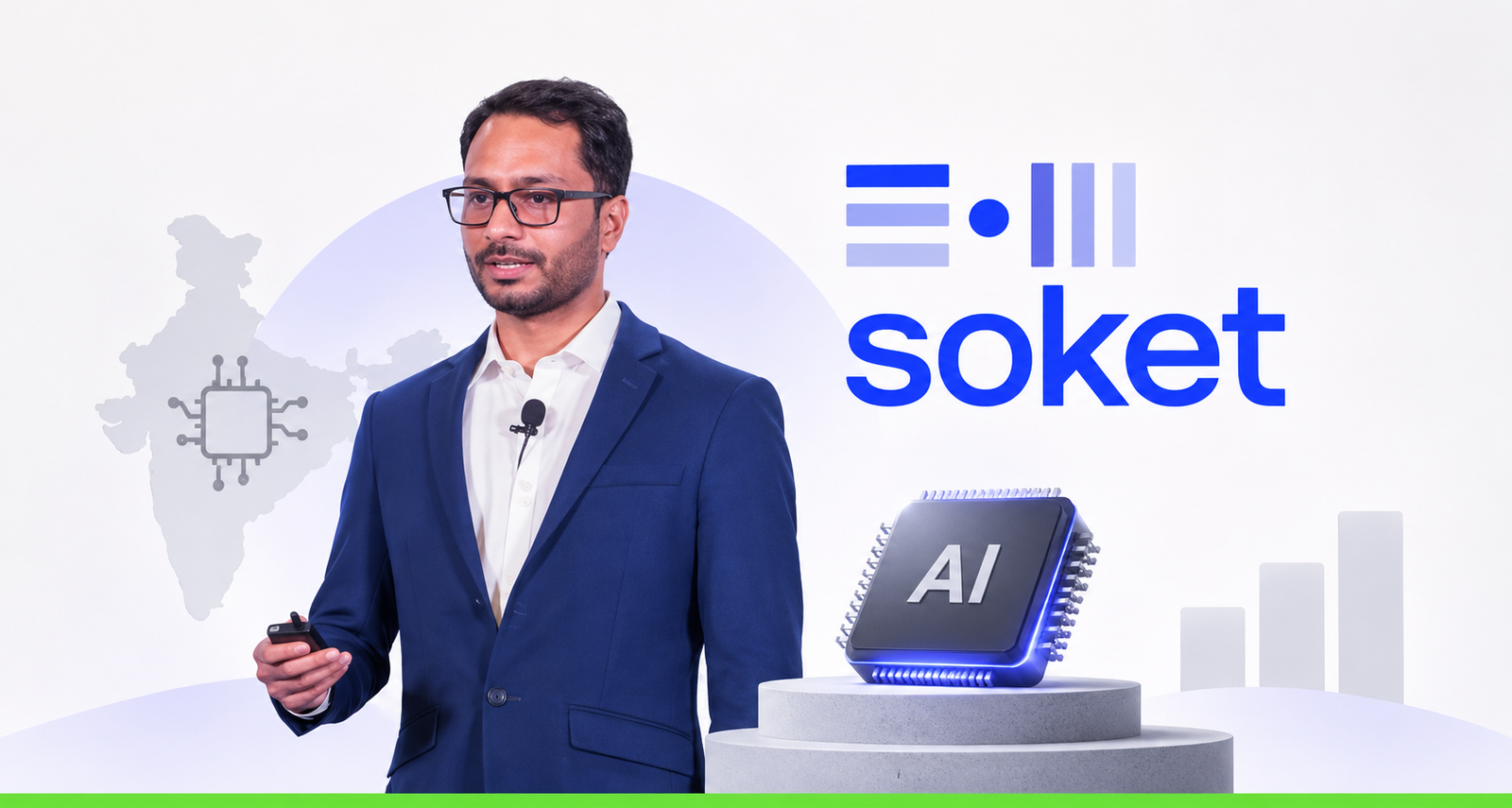
Indian artificial intelligence startup Soket AI has raised $4 million (around Rs 37 crore) from Bajaj Finance and Pennant Technologies to support the development of indigenous foundation models focused on mathematics, coding and reasoning.
Bajaj Finance invested approximately $2 million through Finserv Intelligence, Bajaj Finserv’s applied research and innovation initiative. Pennant Technologies, an investee company of Bajaj Finance, contributed another $2 million to the funding round.
According to Bajaj Finserv’s official announcement, the investment will support Soket AI’s research into foundation models and the development of AI systems for financial services, cybersecurity, defence and enterprise technology.
The funding comes as the startup expands its research activities under Project EKA, its sovereign AI initiative supported by the government’s IndiaAI Mission.
Bajaj Finance and Pennant Technologies Invest $2 Million Each
The $4 million funding round brings together Bajaj Finance and Pennant Technologies as strategic investors in Soket AI.
Finserv Intelligence is Bajaj Finserv’s initiative focused on applied research and innovation. The investment in Soket AI was made through Bajaj Finance.
Pennant Technologies, which is backed by Bajaj Finance, also participated in the round with a $2 million investment.
The partnership is expected to create opportunities for applied AI research, enterprise applications and capability building.
It will combine Bajaj Finance’s experience in financial services with Soket AI’s research in foundation models.
Rajeev Jain, vice chairman and managing director of Bajaj Finance, said the investment would support India’s indigenous AI ecosystem while helping the company explore practical applications of advanced AI research.
“With Soket AI, we look forward to enabling India’s indigenous AI ecosystem, engaging with frontier research at an early stage, and bringing our scale and domain expertise to turn this research into practical solutions,” Jain said.
Soket AI Develops 26-Billion-Parameter EKA-1 Model
Soket AI recently launched EKA-1, a 26-billion-parameter foundation model developed under Project EKA.
The model focuses on mathematics, coding and reasoning, forming part of the company’s broader effort to develop AI technology in India.
The initiative is supported by the government’s IndiaAI Mission, which backs domestic research into foundation models and related technologies.
According to a Business Standard report, Soket AI is working on indigenous large language models and enterprise applications, particularly for sectors that require secure and reliable AI systems.
The latest funding will help the company expand its foundation model research and develop systems for financial services, cybersecurity, defence and enterprise technology.
Soket AI Focuses on Open-Source Models and Indian Languages
Founded in 2019 by Abhishek Upperwal, Soket AI develops a sovereign open-source AI technology stack designed to support Indian languages.
The company’s research focuses on developing AI models that can handle complex reasoning tasks while supporting multilingual applications.
Its founder has previously stated that the company aims to prioritise the requirements of Indian users while developing foundation models.
Through Project EKA, Soket AI is working to build domestic AI capabilities that can be used across different industries.
The company is among a limited group of Indian startups developing indigenous foundation models with support from the IndiaAI Mission.
ZenteiQ Launches Dhīr 2B and Dhīr 5B Models
Soket AI’s fundraising comes amid continued development of indigenous AI models by Indian startups.
Earlier in November 2026, ZenteiQ AiTech Innovations introduced Dhīr 2B and Dhīr 5B, two open-source multilingual AI models.
The models support English and 10 Indian languages and are designed to operate as lightweight AI assistants.
Unlike Soket AI’s EKA-1, which focuses on reasoning capabilities, ZenteiQ’s models are intended for deployment on local infrastructure and edge devices, including smartphones.
They can operate without requiring continuous cloud connectivity, making them suitable for environments where internet access may be limited.
The launch of EKA-1 and the Dhīr models was also covered in an official Press Information Bureau announcement.
Sarvam AI Expands Model Portfolio With Prism
Meanwhile, Indian AI unicorn Sarvam AI has expanded its model portfolio with the introduction of Prism.
Prism is an open-weight decision model built on the company’s Sarvam 105B model.
It is designed for enterprise workflows, including customer support routing, security checks and evaluating the activities of AI agents.
The model focuses on decision-making tasks used in business applications.
Soket AI, ZenteiQ AiTech Innovations and Sarvam AI are developing different types of AI models, including reasoning-focused foundation models, multilingual assistants and enterprise decision systems.
For Soket AI, the latest $4 million investment will support its continued work on Project EKA and its efforts to develop AI systems for financial services, cybersecurity, defence and enterprise technology.
Frequently Asked Questions (FAQs)
1. How much funding has Soket AI raised?
Soket AI has raised $4 million (around Rs 37 crore) from Bajaj Finance and Pennant Technologies.
2. Who invested in Soket AI’s latest funding round?
Bajaj Finance invested approximately $2 million through Finserv Intelligence, while Pennant Technologies invested another $2 million.
3. Who founded Soket AI?
Soket AI was founded in 2019 by Abhishek Upperwal.
4. What is Soket AI’s EKA-1 model?
EKA-1 is a 26-billion-parameter foundation model developed under Project EKA, focusing on mathematics, coding and reasoning.
5. How will Soket AI use the funding?
The company plans to expand foundation model research and develop AI systems for financial services, cybersecurity, defence and enterprise technology.