

The Freeze at Home Format Behind Skippi Ice Pops
-
Startup Spotlight India
- October 25, 2026

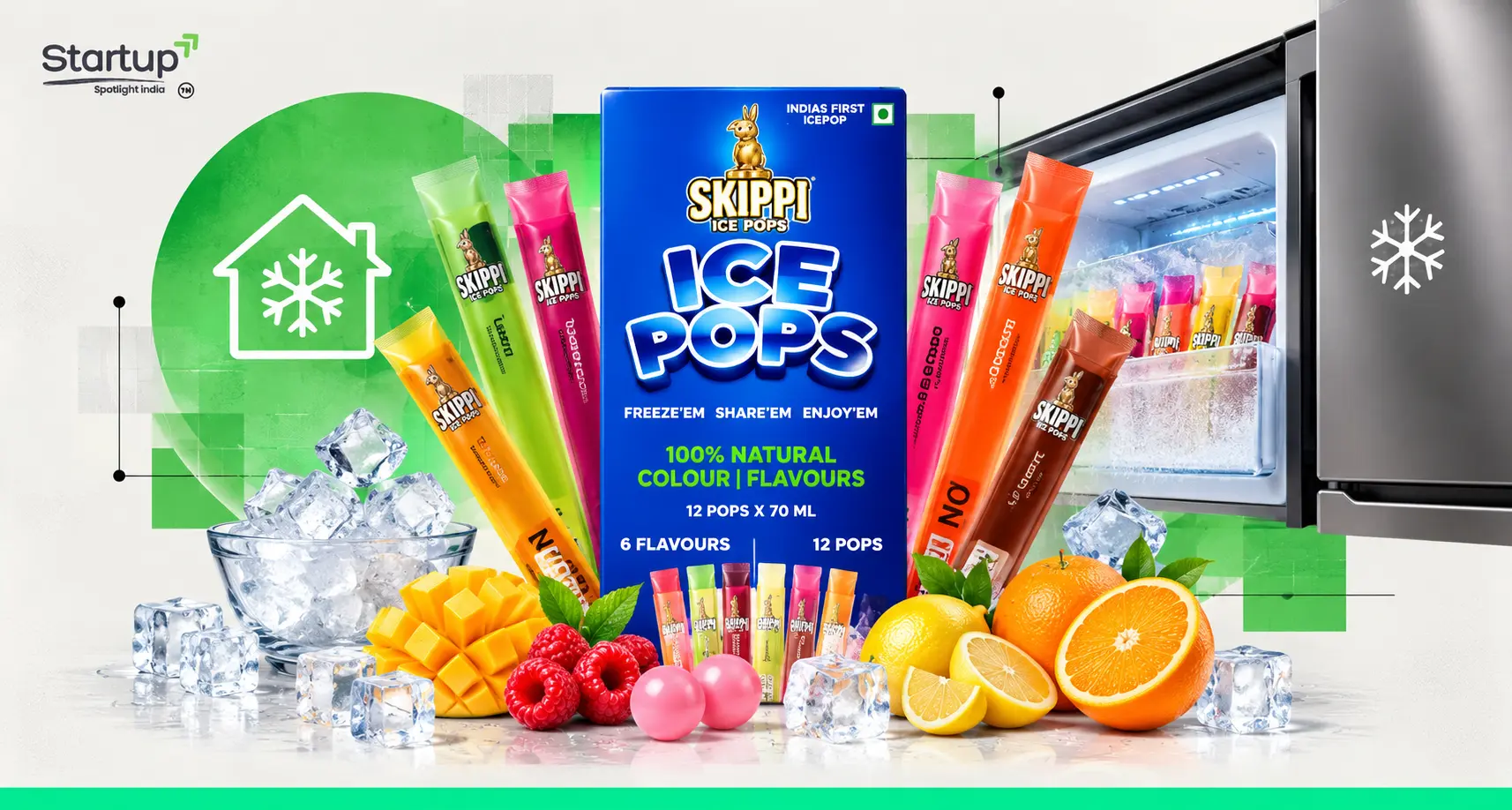
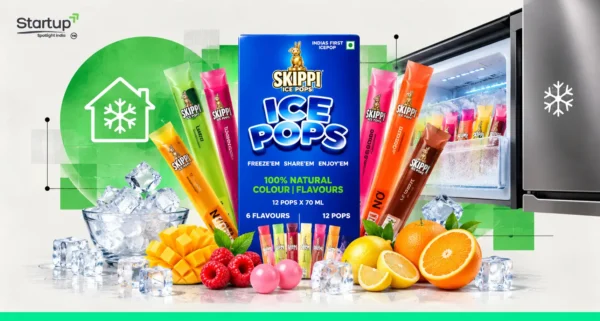
A Skippi ice pop does not need to remain frozen throughout its journey to a shop or a customer’s home. The product travels in liquid form and is frozen before it is eaten. Skippi’s distributor information makes that feature central to its offer. It gives the Hyderabad-based company a way to sell a frozen treat through a distribution system that can handle the unopened product at room temperature.
That format sits at the centre of the business founded by Ravi and Anuja Kabra. Skippi brought a packaged version of the ice pop to Indian buyers, then added retail distribution, online sales and other snack products around it.
Its first-season appearance on Shark Tank India helped introduce the name to a wider audience. The company’s subsequent funding and product expansion show how it developed the business after the episode.
Building on a familiar product
According to Skippi’s account of its beginnings, a family member carrying ice pops to India prompted the founders to look more closely at the local market. Ravi and Anuja had worked in the food and beverage industry and began researching the opportunity for a packaged product.
The company describes a difficult start. Its production plans were disrupted during the pandemic in 2020, with costs continuing while operations were halted. Skippi dates its commercial launch to April 2021.
The founders chose something customers could recognise without a long explanation. The ice pop was familiar. Their work involved giving it a consistent packaged form that could be ordered, stocked and sold under one brand.
Its range includes flavours such as mango, orange, cola and raspberry. The company has also listed flavours built around familiar Indian tastes, including kala khatta and aam panna. Different flavours sit within the same basic product format, allowing buyers to choose individual tastes or mixed packs.
Distribution before the final freeze
The liquid format is a significant part of how Skippi reaches customers. Its distributor page says that unopened ice pops can be stored and transported without a frozen supply chain. The buyer or retailer freezes them before consumption.
This separates the transport of the product from its final serving condition. It also explains why the brand can sell through conventional ecommerce as well as local shops. Its website gives customers instructions for freezing the pops at home, including leaving them in the freezer overnight.
Skippi has also experimented with selling the product already frozen. Its company timeline records the introduction of freezer bikes in August 2022, creating another way for franchise operators to sell the pops. That approach serves a different buying occasion from a customer ordering a box to freeze later.
These formats put the same brand in more than one setting. A household can keep a pack for later use, while a mobile seller can offer an individual frozen pop for immediate consumption.
Attention from Shark Tank India
Skippi became associated with an all-shark investment through the first season of Shark Tank India. Its own published account identifies the programme as a turning point in the business.
The first-season appearance was followed by investment announcements involving angel networks and strategic investors. Those later rounds funded the wider packaged-food business the founders were developing around the original product.
In 2024, Skippi announced a Rs 10 crore pre-Series A round led by Hyderabad Angel Network and Venture Catalysts. Soonicorn Ventures, HEM Securities and angel investors also participated. In that announcement, the company said the capital would support brand building, working capital, new products and leadership hiring.
Another financing announcement followed in June 2025. Business Standard reported a Rs 12 crore extended pre-Series A round, led by Dubai-based strategic family offices of Surya. The reported contribution was Rs 10 crore, with other angel investors providing the remaining Rs 2 crore.
The company linked that round to product development, senior hiring and expansion in the Middle East. It was a plan for deploying new capital, separate from the earlier television appearance.
A wider range on the same shelves
Skippi’s catalogue has expanded beyond ice pops. Its range includes corn snacks and cream rolls, and its website groups these products alongside the original pops. The June 2025 funding report also described the introduction of Crazy Corn, Cornsticks and Cream Rolls.
At the June 2025 announcement, the company reported availability in more than 20,000 retail outlets and on several online platforms. The expanding catalogue gave those retail partners additional Skippi products to stock alongside the original ice pops.
Its export page lists markets including the UAE, Nepal, Bhutan and Kuwait, and invites overseas distributors and retailers to work with the company. This provides a route for taking the packaged format outside India through local import and distribution partners.
The company addresses supermarkets, wholesalers and food importers in its export information. Within India, its distributor offer includes product training, sales support and a mobile application for tracking sales. Its published material also lists in-store branding items, such as posters and standees. Those are parts of the work involved in getting the product stocked and noticed after it reaches a retailer.
Skippi’s business now includes more than the product viewers saw in its pitch. Ice pops remain its recognisable starting point, while packaged snacks, retail partners and export relationships form additional parts of the company.
The freeze-at-home format continues to explain much of that starting proposition: a frozen treat that can reach the customer before it needs a freezer.