

How Dark Stores Improve Quick Commerce Delivery Efficiency
-
Khushi Jain

- October 25, 2026
Quick commerce has changed the way people shop for everyday products. A customer can order groceries, snacks, personal care products or household essentials through an app and receive them within a short period. This model depends on one thing above all: getting the right product to the right customer quickly.
Dark stores play an important role in making this possible.
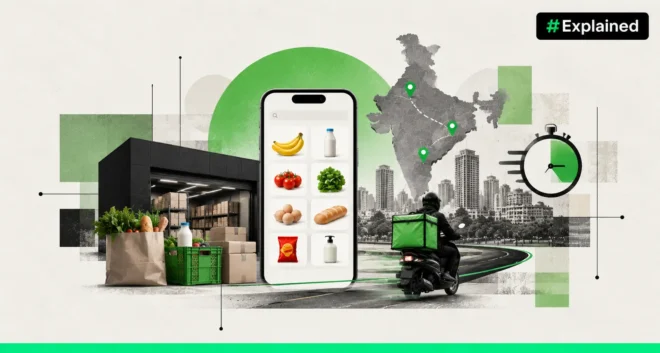
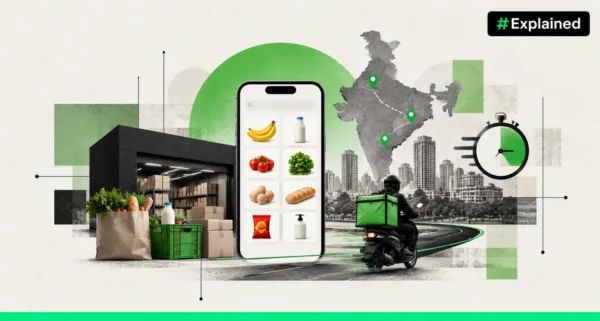
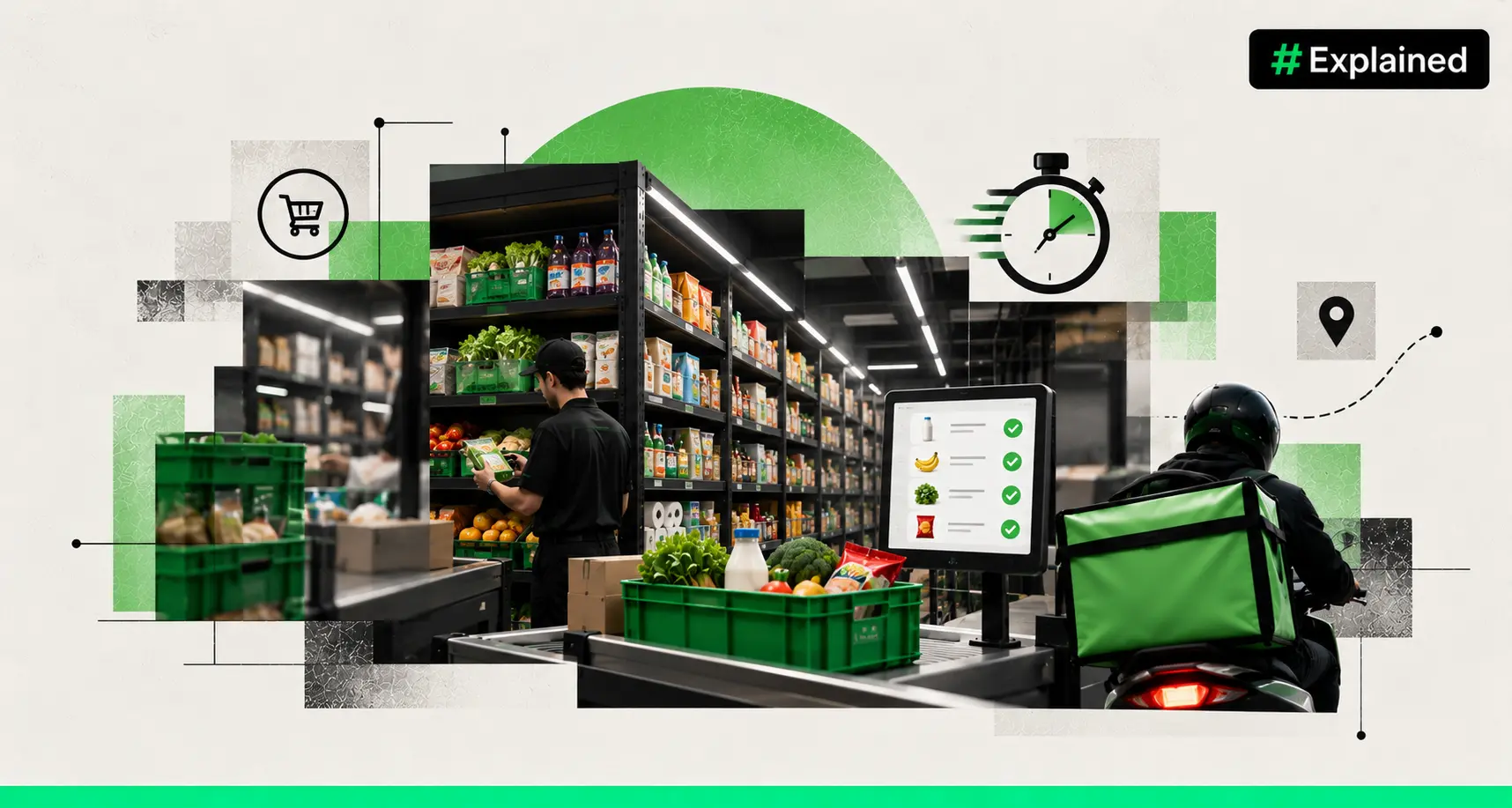
Unlike a traditional shop, a dark store is designed mainly for online orders. Customers usually do not visit these locations to browse products or make purchases. Instead, orders come through an app, staff pick the items, pack them and hand them to delivery partners.
The location, layout, inventory and daily operations of a dark store all affect delivery speed. When these elements work together, an order can move from the app to the customer with fewer delays.
What Is a Dark Store?
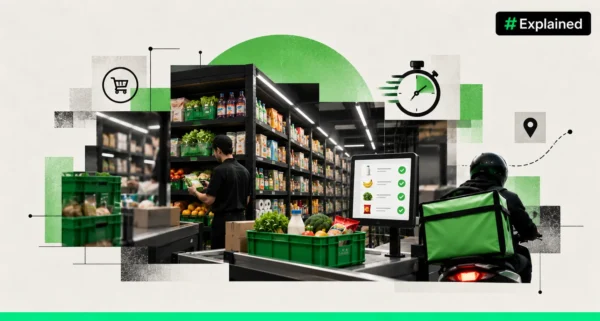
A dark store is a small fulfilment centre created to handle online orders. It may look like a supermarket from the inside, with shelves, refrigerators and storage areas, but its purpose is different.
The store is arranged around order fulfilment rather than customer shopping.
Products that sell frequently are usually kept where staff can find them quickly. When an order comes in, a store worker receives the list, collects the products, packs the order and prepares it for dispatch.
Quick commerce companies use networks of these stores across cities. Having multiple locations allows orders to be processed closer to customers.
For example, instead of sending an order from a large warehouse several kilometres away, a quick commerce platform can fulfil it from a nearby dark store. The shorter distance can reduce delivery time.
Faster Order Processing
Order processing starts as soon as a customer places an order.
In a traditional retail setup, employees may have to deal with customers, answer questions, restock shelves and manage other shop activities. A dark store has a more focused setup. Staff can concentrate on picking, packing and dispatching online orders.
The layout also matters.
If products are organised properly, a picker can move through the store quickly. Popular products may be placed in easily accessible sections. Products that are often purchased together can also be positioned in nearby areas.
Small improvements in walking distance can make a difference when a store handles hundreds or thousands of orders during a day.
Better Inventory Management
Delivery speed is useful only when the product is available.
A customer may place an order expecting a particular product, but if the item is out of stock, the order can be delayed, cancelled or replaced. This creates a poor customer experience.
Dark stores use inventory systems to track product availability. Stock levels can be updated as orders are processed, helping teams understand what is available at a particular location.
This also helps quick commerce companies decide how much stock each store should carry.
Demand can vary from one neighbourhood to another. A store located near offices may sell more ready-to-eat food during working hours, while a residential area may have stronger demand for groceries and household products.
Local inventory planning helps stores keep products closer to the people who are likely to order them.
Strategic Store Locations
Location is one of the biggest factors behind quick commerce delivery times.
A dark store needs to be close enough to its customer base to support fast delivery. Companies therefore select locations based on factors such as population density, order demand, road connectivity and the number of potential customers in the surrounding area.
A well-placed dark store can cover a defined delivery area without requiring delivery partners to travel long distances.
This also helps during busy periods. If demand increases within a particular neighbourhood, a nearby fulfilment location can handle orders without depending on a distant warehouse.
The goal is simple: reduce the distance between inventory and customers.
Smarter Picking and Packing
Picking is one of the most important steps inside a dark store.
Once an order is received, a worker has to locate every item. If the store layout is confusing, picking takes longer. If products are arranged logically, the same task can be completed faster.
Some dark stores use technology to guide workers through the picking process. Systems can provide product locations and order details, helping reduce mistakes.
Packing also needs to be quick and accurate. Fragile products may require separate handling, while chilled or frozen products need suitable packaging and storage.
A well-designed process reduces the time between receiving an order and handing it over for delivery.
Technology and Real-Time Data
Technology connects different parts of a quick commerce operation.
When a customer places an order, the platform needs to identify where the product is available, which dark store should fulfil the order and which delivery partner can collect it.
Inventory data helps determine whether products are available. Order management systems help store staff process orders. Delivery systems help assign and track riders.
Data can also help companies identify patterns.
If a certain product sells quickly in one area, the company can increase stock at the nearby dark store. If another product moves slowly, its stock levels can be adjusted.
This type of decision-making can reduce stockouts and prevent stores from holding more inventory than they need.
Reducing Last-Mile Delivery Time
The last mile is the final journey from the fulfilment location to the customer.
It can be one of the most difficult parts of delivery because traffic, road conditions, weather and building access can all affect the journey.
Dark stores help by placing inventory closer to customers.
If a delivery rider has to travel two or three kilometres instead of ten kilometres, the order can usually reach the customer sooner, although actual delivery time still depends on local conditions.
Shorter delivery distances can also allow riders to complete more orders within a given period. This matters for platforms that handle a large number of orders throughout the day.
Managing Peak Demand
Quick commerce demand is not constant.
Orders can increase during evenings, weekends, holidays, festivals or periods of bad weather. A dark store needs enough staff, stock and operational capacity to handle these spikes.
Historical order data can help companies prepare for predictable demand.
For example, if a store regularly receives a large number of orders between 6 pm and 9 pm, staffing and inventory can be planned around that period.
During major festivals or special events, additional stock can be positioned in locations where higher demand is expected.
Good planning reduces the chances of delays when order volumes rise.
How Dark Stores Help Reduce Delivery Costs
Speed is important, but quick commerce companies also need to manage costs.
A delivery that travels a shorter distance can require less rider time and lower travel costs. Better inventory planning can also reduce wastage caused by excess stock, especially for products with shorter shelf lives.
Efficient store layouts can reduce the time employees spend picking orders. Faster picking means a store can process more orders with the same operational resources, depending on demand and staffing.
The economics vary by location and business model, so a dark store is not automatically profitable simply because it enables fast delivery. Rent, labour, inventory, technology and delivery costs all need to be managed carefully.
The Role of Product Selection
A dark store cannot stock every product available in a large supermarket.
Space is limited, so companies need to decide which products should be kept at each location.
Fast-moving products generally receive more attention because they generate frequent orders. Local demand can also influence the product mix.
For example, customers in one neighbourhood may order more baby-care products, while another area may have higher demand for beverages, snacks or personal care items.
A good product mix reduces the chances that customers will order items that are unavailable at their nearest fulfilment centre.
Challenges Dark Stores Face
Dark stores solve several operational problems, but they have their own challenges.
Finding the right location can be expensive. Inventory needs to be managed carefully because too much stock takes up space and increases holding costs. Too little stock can result in frequent stockouts.
Staff training also matters. Picking errors, incorrect quantities and damaged products can lead to customer complaints.
Another challenge is maintaining consistent performance during peak hours. A store that handles orders efficiently at 3 pm may struggle at 8 pm if demand suddenly doubles.
Companies therefore need to monitor store performance regularly and make changes based on actual order data.
Why Dark Stores Matter to Quick Commerce
Quick commerce is built around convenience and speed. The customer sees the app, places the order and expects the products to arrive soon. Much of the work required to make that happen takes place behind the scenes.
Dark stores provide the physical infrastructure for this process.
Their location brings inventory closer to customers. Their layout helps staff pick products faster. Inventory systems help track stock, while order and delivery technology connects the store with the customer.
The result is a fulfilment model designed around online ordering rather than traditional shopping.
As quick commerce continues to develop, dark stores will remain an important part of how companies manage local inventory and fulfil customer orders. Their effectiveness will depend on practical factors such as location, stock availability, store operations, technology and demand planning.
For brands selling through quick commerce platforms, understanding this system is useful too. Product availability, packaging, demand patterns and local inventory can all influence how easily a product reaches the customer.
In the end, fast delivery does not start with the delivery rider. It starts much earlier, with where the product is stored, how it is organised and how quickly the order can move through the fulfilment process.
Frequently Asked Questions
1. What is a dark store in quick commerce?
A dark store is a fulfilment centre designed specifically for online orders. Customers usually cannot shop there directly. Staff pick, pack and prepare orders for delivery.
2. How do dark stores make quick commerce deliveries faster?
Dark stores are located close to customers and are organised for fast order processing. This reduces the distance products need to travel and helps staff pick and pack orders quickly.
3. How do dark stores manage inventory?
Dark stores use inventory management systems to track stock levels and product availability. This helps companies maintain the right products at each location based on local demand.
4. Why is location important for a dark store?
A suitable location allows a dark store to serve customers within a smaller delivery area. Shorter delivery distances can reduce travel time and help riders complete orders more efficiently.
5. What challenges do dark stores face?
Common challenges include high operating costs, limited storage space, stockouts, inventory management, staffing during peak hours and maintaining accurate order fulfilment.