


What Is Quick Commerce and How Does It Work in India?
-
Startup Spotlight India
- October 25, 2026

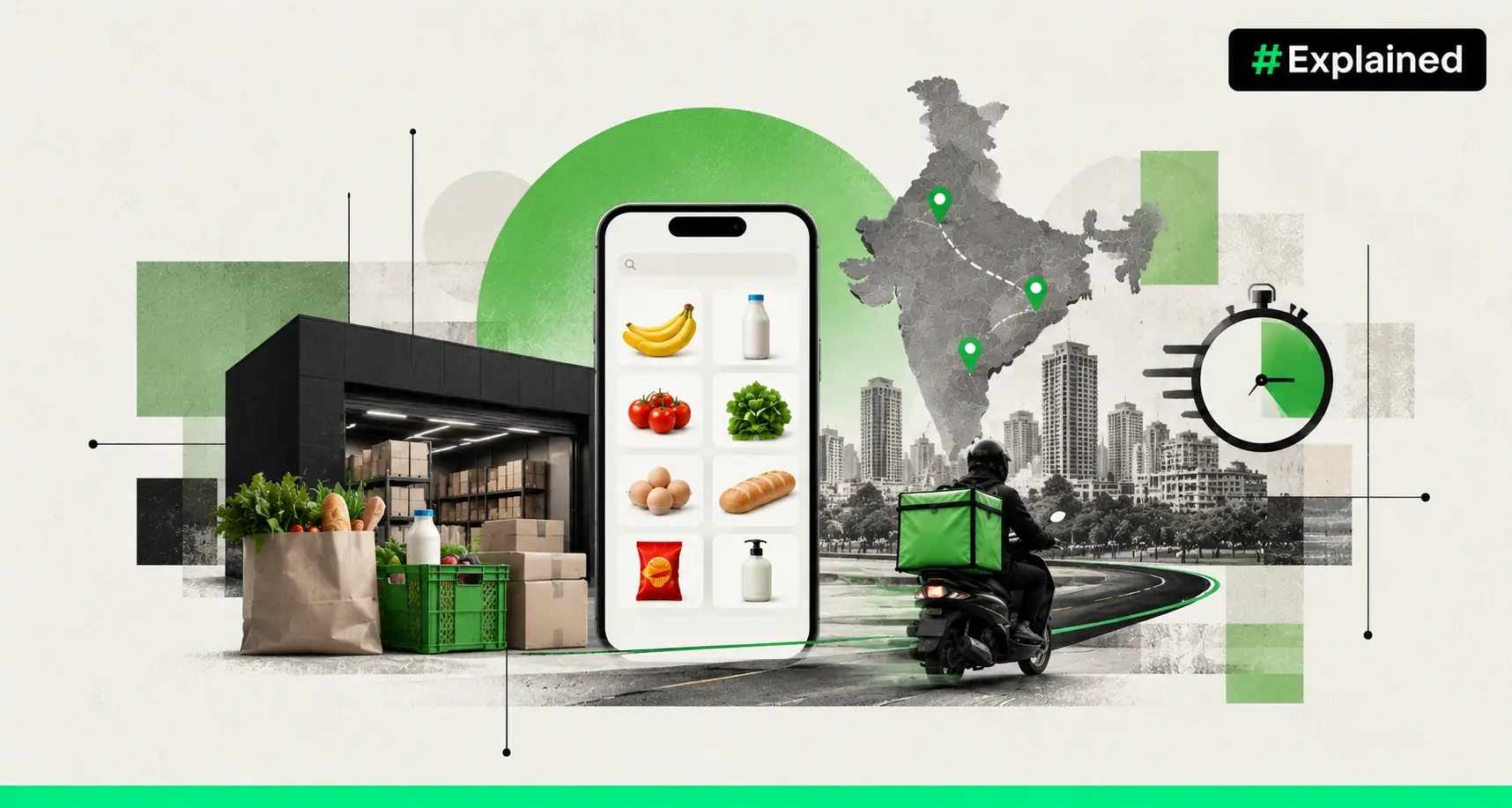
Quick commerce, often called q-commerce, is a form of online shopping built around fast delivery. Instead of waiting a day or two for an order, customers can receive everyday products within a much shorter period.
In India, quick commerce has become a common way to buy groceries, snacks, beverages, personal care products, household items and other daily essentials. Platforms such as Blinkit, Zepto and Swiggy Instamart operate networks of local fulfilment centres, commonly known as dark stores, to process these orders.
The idea sounds simple. A customer opens an app, chooses a product, places an order and waits for it to arrive. Behind that short customer journey is a system involving inventory planning, local warehouses, order processing, technology and last-mile delivery.
What Is Quick Commerce?
Quick commerce is an online retail model focused on delivering products within a short time, often within minutes in areas where the service is available.
Traditional e-commerce usually works through larger fulfilment centres that may serve customers across a wide geographic area. Quick commerce relies more heavily on smaller fulfilment locations placed close to the customers they serve.
This difference is important because delivery time depends partly on distance. If the product is already stored a few kilometres from the customer, a delivery partner does not need to travel from a large warehouse located far outside the neighbourhood.
Quick commerce therefore combines online ordering with a local fulfilment network.
How Does Quick Commerce Work?
The process starts when a customer places an order through a quick commerce app.
The platform checks the customer’s location and identifies a nearby fulfilment centre that can handle the order. The system also checks whether the requested products are available there.
Once the order reaches the selected store, a worker picks the products from the shelves. The items are then packed and handed to a delivery partner.
The delivery partner collects the package and takes it to the customer’s address.
The entire process needs to happen quickly. A delay at any stage can affect the final delivery time.
This is why quick commerce companies pay close attention to store locations, product availability, staff movement, order processing and delivery routes.
The Role of Dark Stores
Dark stores are one of the main parts of the quick commerce model.
A dark store is a fulfilment centre designed for online orders rather than walk-in customers. It contains products arranged on shelves and storage areas, similar to a small supermarket, but the layout is designed around fast picking.
When an order comes in, staff can locate the products, collect them and prepare the package for dispatch.
The location of these stores is also important. A single dark store usually serves customers within a defined area. Companies use demand data and local customer patterns when deciding where to place these facilities.
Having products closer to customers can reduce the distance covered by delivery partners.
Why Do People Use Quick Commerce?
Convenience is one of the main reasons customers use quick commerce.
People may need a few groceries but may not want to visit a shop. They may also realise that they have run out of an everyday product while cooking or working from home.
With quick commerce, the customer can order from a mobile phone without making a separate shopping trip.
The model is also useful for smaller, immediate purchases. A customer may order milk, bread, snacks, cleaning products or other essentials instead of planning a large weekly shopping trip.
Over time, this has changed how some consumers approach routine purchases.
What Products Are Available on Quick Commerce Platforms?
Quick commerce platforms initially focused heavily on groceries and household essentials. Their product ranges have since expanded in many markets.
Depending on the platform and location, customers may find fresh produce, packaged food, beverages, personal care products, cleaning supplies, stationery, pet products and other everyday items.
The exact selection varies by store.
A quick commerce company has limited shelf space at each location, so it needs to decide which products are worth keeping in stock. Products with regular demand are generally more suitable for this model.
Local demand also matters. A product that sells quickly in one neighbourhood may move slowly in another.
How Inventory Management Works
Inventory management is a major part of quick commerce.
A platform needs to know which products are available at each store. If the app shows a product as available but the store has already run out of it, the customer may face a cancellation or substitution.
To reduce these problems, companies use software to track inventory and order activity.
Sales data can help predict demand for different products and time periods. For example, a store may need more cold drinks during warmer months or more certain grocery products around festivals.
Good inventory planning helps companies keep popular products available without filling every store with unnecessary stock.
How Technology Supports Quick Commerce
Technology connects the customer, dark store and delivery process.
When a customer places an order, the system needs to determine which fulfilment centre should process it. It then needs to communicate the order to store staff and coordinate the delivery.
Technology can also help with inventory tracking, product picking, payment processing and delivery tracking.
Data from previous orders can help companies understand customer demand. This information can influence product selection, staffing and inventory levels at different locations.
For the customer, most of this work remains invisible. They simply see the available products and delivery information in the app.
The Importance of Last-Mile Delivery
The last mile refers to the final journey from the fulfilment centre to the customer’s address.
For quick commerce, this part of the process needs careful planning because delivery distances are usually short and order volumes can be high.
Traffic, road conditions, weather and building access can affect delivery times. A store may be close to a customer, but a difficult route can still create delays.
Quick commerce companies therefore need to manage delivery partners and order assignments efficiently.
When a delivery partner spends less time travelling for each order, they may be able to complete more deliveries during a shift, depending on local demand and operating conditions.
How Quick Commerce Differs From Traditional E-Commerce
The biggest difference is the fulfilment model and expected delivery time.
Traditional e-commerce often uses larger warehouses that serve customers across wider regions. Orders may travel through several stages before reaching the customer.
Quick commerce uses smaller, local fulfilment centres positioned closer to customers.
The product range can also differ. Large e-commerce platforms can offer millions of products because their warehouses and seller networks cover a much wider selection. Quick commerce stores have limited physical space, so they usually focus on products that customers are likely to need quickly.
This means the two models serve different shopping situations, even though both use online ordering.
Challenges in the Quick Commerce Model
Fast delivery comes with operating challenges.
Maintaining inventory across many locations can be difficult. A company needs to keep enough stock available while avoiding unnecessary inventory.
Store location is another challenge. A dark store needs to be close enough to customers to support fast delivery, but property and operating costs vary from one area to another.
Staffing can also become difficult during busy periods. If order volumes rise sharply, stores need enough workers to pick and pack orders without creating delays.
Delivery operations face their own challenges, including traffic, weather and high demand during peak hours.
The economics of quick commerce therefore depend on more than delivery speed. Companies need to balance customer demand with inventory, labour, property and delivery costs.
How Brands Can Use Quick Commerce
Quick commerce has also become relevant for brands, particularly those selling everyday consumer products.
Being available on a quick commerce platform can give a brand access to customers who are already looking for products in a particular location.
However, listing a product is only one part of the process. Brands need to consider product availability, pricing, packaging, demand and stock levels.
A product that is frequently out of stock may lose sales even if customers are searching for it. Similarly, poor product information can make it harder for customers to understand what they are buying.
For brands, quick commerce works best when the operational side of the business is planned alongside the online listing.
The Future of Quick Commerce in India
Quick commerce has become part of the way many Indian consumers buy everyday products. Its growth has been supported by smartphones, digital payments, local fulfilment networks and changing shopping habits.
The model is likely to continue evolving as companies test different product categories, store formats and delivery models.
For customers, the basic attraction remains straightforward: order what you need and receive it without making a separate trip to the shop.
For businesses, the model requires careful management of inventory, fulfilment, delivery and costs.
Quick commerce is therefore more than fast delivery. It is a retail system built around keeping frequently needed products close to customers and moving orders through the fulfilment process quickly.
Understanding how that system works helps explain why a delivery that takes only a short time can depend on a much larger operation behind the scenes.
Frequently Asked Questions
1. What is quick commerce?
Quick commerce is an online retail model that focuses on delivering everyday products to customers within a short period, often within minutes in areas where the service is available.
2. How does quick commerce work in India?
Customers place orders through an app. The order is processed at a nearby dark store, where staff pick and pack the products. A delivery partner then collects the order and delivers it to the customer.
3. What is a dark store in quick commerce?
A dark store is a local fulfilment centre designed for online orders. It does not usually serve walk-in customers and is organised to help staff pick and pack orders quickly.
4. Which products are available through quick commerce?
Quick commerce platforms commonly offer groceries, fresh produce, snacks, beverages, personal care products, household items and other everyday essentials. Product availability depends on the platform and location.
5. How is quick commerce different from traditional e-commerce?
Quick commerce focuses on fast, local delivery using nearby fulfilment centres. Traditional e-commerce generally relies on larger warehouses and serves customers across wider geographic areas, with longer delivery times.





One Comment
How Dark Stores Improve Quick Commerce Delivery Efficiency
[…] Quick commerce companies use networks of these stores across cities. Having multiple locations allows orders to be processed closer to customers. […]