


Kapiva Targets Rs 1,000 Crore Revenue in 2–3 Years After Rs 463.5 Crore FY26 Sales
-
Khushi Jain

- November 28, 2026
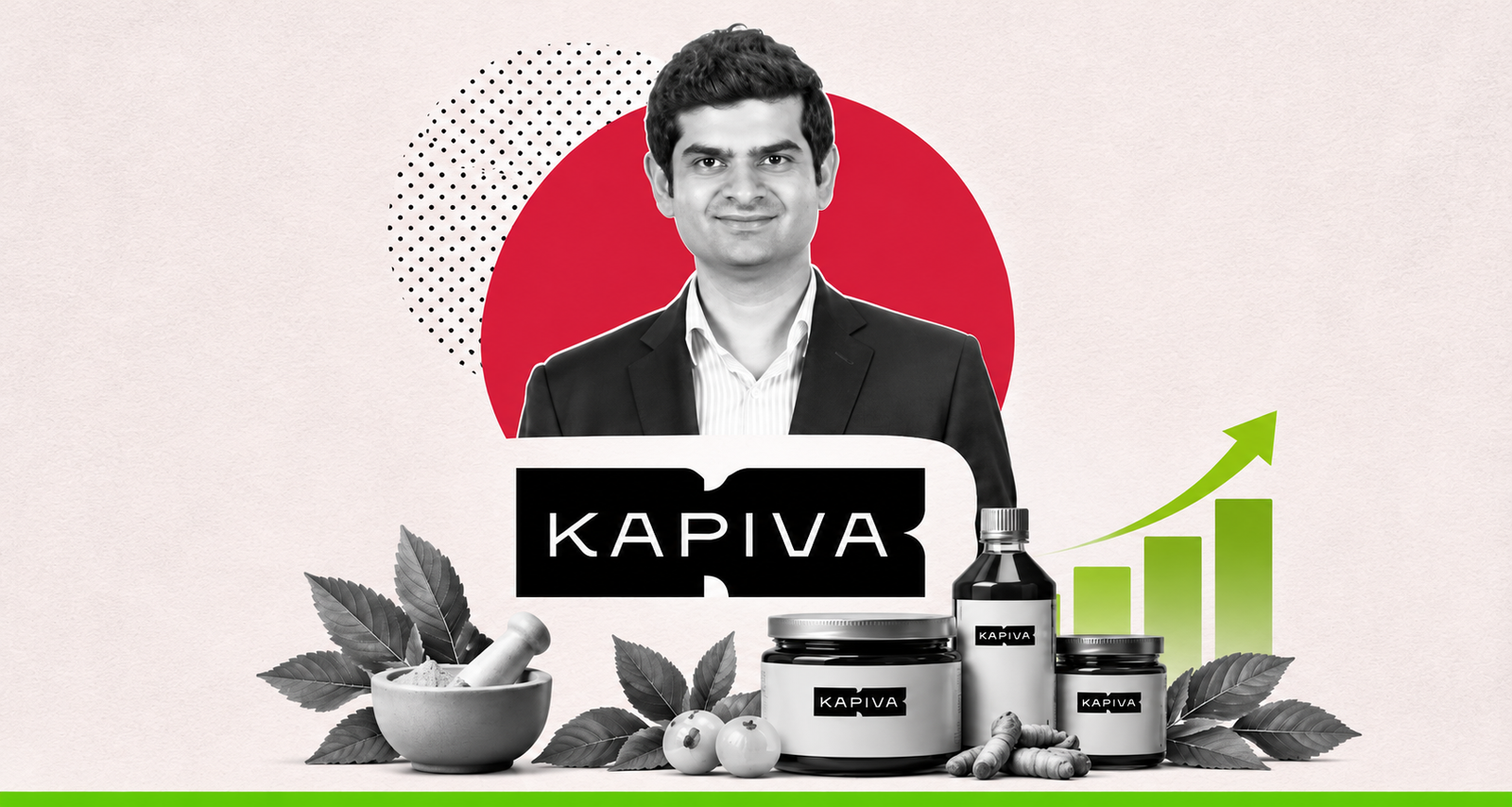
Ayurvedic wellness brand Kapiva is targeting Rs 1,000 crore in revenue over the next two to three years as it expands its product portfolio, offline distribution, research capabilities and digital operations.
The company reported revenue from operations of Rs 463.5 crore in FY26, up 36.4% year on year. Its growth has been supported by increasing demand across wellness categories and expansion into general trade, ecommerce marketplaces and quick commerce.
Founded in 2016 by Ameve Sharma, a third-generation entrepreneur from the Baidyanath business family, Kapiva has expanded from juices, honey and functional foods into specialised Ayurvedic wellness products.
The company now offers more than 100 stock-keeping units (SKUs) and has an offline distribution network covering over 80,000 touchpoints.
Kapiva has also integrated PhonePe Payment Gateway into its existing payment infrastructure to strengthen UPI transactions and support its growing direct-to-consumer (D2C) business.
Kapiva Reports Rs 463.5 Crore Revenue in FY26
Kapiva reported Rs 463.5 crore in operating revenue for FY26, representing a 36.4% year-on-year increase.
The company is now working towards reaching Rs 1,000 crore in annual revenue over the next two to three years.
Its growth strategy includes expanding existing product categories, entering new health segments, investing in research and strengthening distribution across online and offline channels.
The brand’s offline business grew more than 80% during FY26, making it its fastest-growing sales channel.
According to financial coverage by Indian Retailer, Kapiva’s revenue growth was accompanied by a significant expansion in offline sales.
The company is also increasing its presence in smaller cities as it develops its retail network.
How Ameve Sharma Built Kapiva
Ameve Sharma established Kapiva in 2016 after stepping away from his family’s Ayurveda business.
His objective was to develop a brand that combined traditional Ayurvedic knowledge with research, product standardisation and measurable outcomes.
Kapiva’s approach is based on the traditional Ayurvedic concept of three doshas:
- Kapha: Associated with earth and water, and traditionally linked with structure and joints.
- Pitta: Associated with fire and water, and traditionally linked with digestion and metabolism.
- Vata: Associated with space and air, and traditionally linked with movement and nervous system functions.
These are traditional Ayurvedic classifications rather than independently established medical mechanisms.
Kapiva initially introduced juices, honey and other functional wellness products intended for everyday consumption.
The company also operated Ayurvedic clinics in Mumbai, where direct interactions with consumers helped it understand demand for convenient products addressing specific wellness concerns.
These experiences contributed to Kapiva’s decision to shift towards a D2C model.
The brand subsequently introduced products in formats such as gummies and expanded into categories including diabetes care, heart health, gym and sports nutrition, pain management, digestion, sleep, women’s health and kids’ nutrition.
Government Survey Shows Continued Use of AYUSH Systems
Ayurveda remains a commonly used traditional healthcare system in India.
According to the Ministry of Statistics and Programme Implementation’s AYUSH survey, around 46% of rural respondents and 53% of urban respondents reported using an AYUSH system for the prevention or treatment of ailments during the preceding year.
Ayurveda was the most commonly used system among the AYUSH categories covered by the survey.
For brands such as Kapiva, the continued use of traditional healthcare systems presents an opportunity to develop products for existing consumer needs.
However, increasing expectations around ingredient quality, research and product consistency mean that companies must also provide stronger evidence to support product-specific claims.
Kapiva Expands to More Than 100 Products
Kapiva has expanded its product portfolio beyond everyday wellness products to focus on specific consumer requirements.
Its range now includes more than 100 SKUs across several health and wellness categories.
Dia Free, the company’s diabetes management range, doubled in FY26 and is expected to grow by 60% in FY27.
The company is also expanding in categories such as heart health, digestion, pain management, sleep, women’s health, kids’ nutrition and sports nutrition.
Sharma believes consumers are increasingly evaluating products based on ingredient quality, standardised formulations, defined potency and supporting research.
The company is therefore investing in research and development as it expands into more specialised categories.
Kapiva Commits Up to Rs 50 Crore for Research and Innovation
Kapiva has established a dedicated research team and committed up to Rs 50 crore through its Kapiva Innovation Fund.
The initiative is intended to support research, clinical validation and product development within Ayurveda.
The company aims to develop standardised formulations and strengthen the scientific evidence supporting its products.
Its investment in research also forms part of its efforts to differentiate itself from other established Ayurveda and wellness companies.
However, the existence of a research programme or clinical validation initiative does not by itself establish the effectiveness of every product in the company’s portfolio.
Kapiva’s expansion into specialised wellness categories makes product-specific evidence and consistent quality important considerations for its next phase of growth.
Kapiva Has Raised $75 Million in Primary Funding
Kapiva has raised $75 million in overall primary funding, according to the figures provided by the company.
Its investors include OrbiMed, 360 ONE Asset, 3one4 Capital and Vertex Ventures, among others.
The company has used external investment to support business expansion, product development, research and distribution.
Its funding history includes participation from institutional investors focused on consumer and healthcare businesses.
The involvement of 360 ONE Asset, Vertex Ventures and 3one4 Capital was also detailed in a Kapiva funding announcement published by Vertex Ventures.
Alongside its research investments, Kapiva is expanding its consumer distribution network and developing additional healthcare services.
Offline Distribution Crosses 80,000 Touchpoints
Offline retail has emerged as an important growth channel for Kapiva.
The company’s offline business grew more than 80% in FY26, making it its fastest-growing channel.
Over the past one to two years, Kapiva has more than doubled its offline presence to over 80,000 touchpoints.
Its products are also available through the company’s D2C website, online marketplaces and quick commerce platforms.
Each channel serves a different role in Kapiva’s distribution strategy.
The company’s website allows it to provide product information, manage direct customer relationships and analyse post-purchase behaviour.
Marketplaces support product discovery, while quick commerce and physical stores offer additional ways to purchase products.
Kapiva is focusing on connecting these channels as it expands into newer categories and Tier II and III markets.
Kapiva Relaunches Ayurveda Clinics in Bengaluru
Kapiva has also returned to the clinic model that formed part of its early operations.
In 2026, the company launched Kapiva Ayurveda Clinics in Bengaluru.
The new clinics are intended to offer a broader healthcare proposition involving products, treatment, patient adherence and longer-term care.
This differs from Kapiva’s earlier approach, which primarily used clinics to engage with consumers and understand product requirements.
The new model is part of the company’s plan to expand beyond packaged Ayurvedic wellness products.
However, Kapiva has yet to publicly demonstrate how the clinic network will scale or whether its business economics will differ significantly from the earlier model.
Kapiva Integrates PhonePe Payment Gateway for D2C Transactions
As Kapiva expands its online business, it is also investing in the systems supporting customer transactions.
The company has integrated PhonePe Payment Gateway alongside its existing payment infrastructure to strengthen its UPI payment capabilities.
According to Sharma, the integration is intended to simplify checkout by reducing the number of steps involved in completing UPI payments.
PhonePe Payment Gateway operates behind Kapiva’s own payment page and routing system, allowing the company to retain visibility into its checkout process.
This includes identifying points where customers abandon transactions.
For an ecommerce business, failed or pending payments can interrupt purchases even after customers have selected their products.
Kapiva plans to monitor payment performance as transaction volumes increase.
Kapiva Automates Payment Reconciliation
Kapiva has also developed an internal system for payment reconciliation.
Over the past year, the company built a system that matches payment gateway settlements and courier remittances with order data on a daily basis.
This has reduced a reconciliation process that previously took multiple days to less than a day.
PhonePe Payment Gateway’s transaction-level reporting is expected to work alongside the existing system.
The company aims to use the integration to manage settlements and resolve payment-related exceptions as its D2C business grows.
However, the integration is only beginning to go live, and its impact on payment success rates and checkout completion has not yet been established.
Kapiva plans to gradually increase transaction volumes while tracking UPI success rates, checkout completion and failed or pending payments.
It is also exploring UPI recurring mandates for subscriptions and QR-based payment collections to encourage cash-on-delivery customers to complete transactions digitally.
Four Priorities Behind Kapiva’s Rs 1,000 Crore Revenue Target
Kapiva is focusing on four areas as it works towards its Rs 1,000 crore revenue target over the next two to three years.
Expanding Existing Product Categories
The company plans to deepen its presence in established categories, including lifestyle wellness and diabetes management.
This will involve increasing market penetration and expanding sales of its existing products.
Entering New Health and Wellness Categories
Kapiva is developing products across pain management, digestion, sleep, women’s health and kids’ nutrition.
The expansion is intended to address additional consumer needs and reduce dependence on existing categories.
Strengthening Research and Product Innovation
The company plans to invest in standardised Ayurvedic formulations, clinical validation and research through initiatives such as the Kapiva Innovation Fund.
Up to Rs 50 crore has been committed to support these activities.
Expanding Omnichannel Distribution
Kapiva will continue developing its D2C website, ecommerce marketplace presence, quick commerce distribution and offline retail network.
The company is also focusing on greater penetration in Tier II and III markets.
Kapiva Faces Challenges as It Expands Its Ayurveda Business
Kapiva’s next phase of growth will involve managing expansion across consumer products, physical retail, healthcare services and digital infrastructure.
The company is increasing its product portfolio while investing in manufacturing-related product development, research, distribution and payment systems.
Its new Ayurveda Clinics in Bengaluru represent another area of expansion beyond packaged wellness products.
However, scaling several business operations simultaneously will require continued investment.
Kapiva also faces competition from established Ayurveda and wellness brands, alongside growing expectations around product quality and research.
With Rs 463.5 crore in FY26 operating revenue and a target of Rs 1,000 crore over the next two to three years, Kapiva’s growth plans depend on its ability to expand distribution, develop new products and manage its operations as the business grows.
Frequently Asked Questions (FAQs)
1. What was Kapiva’s revenue in FY26?
Kapiva reported revenue from operations of Rs 463.5 crore in FY26, representing 36.4% year-on-year growth.
2. What is Kapiva’s revenue target?
Kapiva aims to reach Rs 1,000 crore in annual revenue over the next two to three years.
3. Who founded Kapiva?
Kapiva was established in 2016 by Ameve Sharma, a third-generation entrepreneur from the Baidyanath business family.
4. How much funding has Kapiva raised?
Kapiva has reported raising $75 million in overall primary funding from investors including OrbiMed, 360 ONE Asset, 3one4 Capital and Vertex Ventures.
5. Why has Kapiva integrated PhonePe Payment Gateway?
Kapiva has integrated PhonePe Payment Gateway to support its UPI payment capabilities, simplify checkout and improve transaction reporting. The impact on payment success rates is yet to be established.